#1 Homebuyer. Local. Trusted. Family Owned.
We have been buying houses in Nebraska since 1996.






#1 Homebuyer. Local. Trusted. Family Owned.
We have been buying houses in Nebraska since 1996.

#1 Homebuyer. Local. Trusted. Family Owned.
We have been buying houses in Nebraska since 1996.

Trapped in a family inheritance dispute, emotions boiling as one sibling refuses to sell Grandma’s Nebraska farmhouse. The clock ticks while property taxes mount, maintenance costs drain savings, and potential buyers walk away. Smart heirs tackle this challenge through mediation, legal partition actions, or buyout arrangements rather than endless family feuds.
In Nebraska, all heirs must typically agree to sell inherited property when it’s held as tenants in common. Without unanimous consent among all co-owners, the sale cannot legally proceed. Disagreements often lead to court proceedings where a judge may order a partition action. This legal process divides the property or forces a sale with proceeds distributed accordingly.
In this blog I will explore everything related to selling inherited property when heirs disagree.
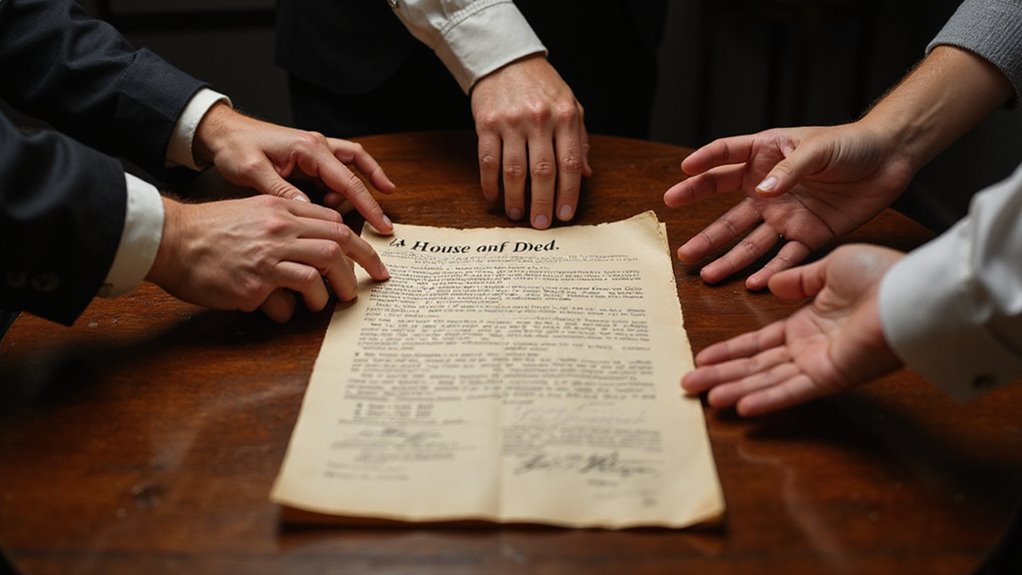
No, all heirs typically cannot sell inherited property without everyone’s agreement. Nebraska law requires unanimous consent when heirs hold property as tenants in common. This protects each person’s ownership rights.
Disagreements may lead to court intervention. A partition action can force property division or sale through legal proceedings. Until resolution, no heir can sell the entire property alone.
Mediation offers a path to peaceful resolution. Legal steps often become necessary for complicated cases. These processes ensure fair treatment for everyone involved.
Inheritance laws in Nebraska determine whether all heirs must agree to sell property or if court intervention is needed. They also differentiate between probate and non-probate assets, affecting how sales are handled. Additionally, whether property is held as joint tenancy or tenants in common influences the sale process and heir rights.
Nebraska inheritance laws govern how heirs can sell inherited property. All heirs must agree to a sale when property is held as tenants in common. This protects each person’s ownership rights. Courts can order a partition action if heirs cannot reach agreement.
When no will exists, intestate succession laws determine who inherits the property. The court may supervise these transactions. This oversight ensures fair treatment for everyone involved. Additionally, the legal system creates a transparent process.
Proceeds from forced sales are divided according to ownership percentages. This framework helps avoid disputes between family members. As a result, heirs can navigate property sales with clear guidance.
Probate property requires court oversight during inheritance. A personal representative handles the sale through legal channels. Heir objections may delay transfers and need court resolution.
Non-probate property transfers directly to beneficiaries without court involvement. Assets like jointly held real estate or payable-on-death accounts bypass probate entirely. This direct transfer makes the selling process much simpler. In these situations, beneficiaries can act without waiting for court approval.
Furthermore, understanding this distinction helps navigate inheritance complications efficiently. Clear communication remains essential regardless of property classification. Following proper procedures ensures smooth transfers and prevents legal conflicts.
Yes, ownership types significantly impact inherited property sales. Joint tenancy transfers ownership automatically to surviving owners when one owner dies. This creates a streamlined inheritance process with minimal legal complications. Each joint tenant holds equal ownership rights.
Tenants in common maintain separate interests that pass to their heirs. Each owner can sell or transfer their share independently without other owners’ permission. This flexibility sometimes leads to disagreements among heirs about property management or sale decisions.
When heirs cannot reach agreement, courts may order partition actions. The court might force a property sale and divide proceeds among owners. Understanding these differences helps prevent disputes and ensures smoother property transfers.
When heirs disagree on selling, options like mediation, legal partition actions, or buyouts can help resolve the dispute. Mediation encourages compromise without court intervention, while partition allows the court to order a sale if needed. Buyouts enable willing heirs to purchase the property at fair market value, ending the disagreement.
Mediation helps resolve inheritance property disputes without court. A neutral mediator guides discussions toward mutual agreement on property matters. This approach keeps communication open and reduces legal expenses.
Heirs can address concerns about fair market value or potential buyout arrangements. The process typically saves time compared to litigation. Most states recognize mediation agreements as legally binding documents when properly executed.
Additionally, mediation preserves family relationships during challenging times. Participants maintain control over decisions rather than leaving outcomes to a judge. As a result, solutions often better reflect everyone’s needs and circumstances.
Partition actions resolve property disputes when heirs can’t agree on selling inherited property. Any heir can petition the court when others refuse to cooperate. Courts examine the case and may order property sale with proceeds divided by ownership percentages. Nebraska law ensures fair outcomes, particularly when physical division isn’t practical.
Before legal action, mediation offers a less formal solution. However, partition provides a structured resolution when discussions fail. This legal process safeguards everyone’s financial interests. Furthermore, it creates a definitive path for property division when heirs remain deadlocked.
Buyouts let heirs keep property by purchasing interests from those who want to sell. This option resolves disagreements without court involvement. An appraisal determines fair market value for the transaction.
The process requires several key steps. First, obtain a professional property valuation. Next, negotiate terms all parties can accept. Then, create a formal agreement with legal assistance. Finally, transfer ownership through proper deed filing.
Additionally, buyouts preserve family relationships while respecting everyone’s wishes. They work especially well when heirs have different goals for inherited property. Local inheritance laws may impact buyout procedures, so consult an attorney before proceeding.
To sell inherited property with multiple heirs, you need to secure legal authority, often through the court or the personal representative. You’ll also have to gather necessary documents, determine the property’s fair market value, and then proceed with the sale. Finally, you’ll distribute the proceeds fairly among all heirs according to their ownership interests.
Legal authority is required to sell inherited property with multiple heirs. An executor needs court permission to proceed with a sale, especially when heirs disagree. The probate court can grant this authority through a formal petition process.
File your request with the local probate court. Include documentation showing all heirs’ interests in the property. You must demonstrate compliance with inheritance laws and proper notification of all parties. The court reviews these materials before making a decision.
When disputes arise, consider mediation as an alternative. Court-ordered partition remains an option if heirs cannot reach consensus. However, this approach often results in less favorable financial outcomes.
You need specific documents before selling inherited property. First, obtain proof of inheritance like a will or court documents that establish your ownership rights. The property deed, title report, and existing appraisals are also essential for this process.
These records clarify each heir’s interest and help resolve potential inheritance disputes. Comprehensive documentation prevents delays when selling property with multiple heirs involved.
Legal complications may arise without proper paperwork, potentially jeopardizing inheritance rights. Therefore, thorough preparation at this stage ensures a smoother transaction process. With all documents organized, you can confidently proceed with the sale.
Fair market value of inherited property with multiple heirs requires professional appraisals. Hire a licensed local appraiser who understands your area’s real estate market. Consider getting multiple opinions for better accuracy. Comparable recent sales provide critical data points for determining true value.
Property records and documentation help support the final valuation. This transparency prevents conflicts between heirs during the inheritance process. Furthermore, clear documentation protects everyone’s interests throughout the property division.
Estate tax implications may affect valuation requirements in certain jurisdictions. Remember that timing matters since property values change over market cycles. With proper valuation, all heirs receive fair treatment when distributing assets.
Sale proceeds are distributed among heirs based on their legal ownership shares. The executor follows court orders or documented interests to divide the money fairly. All heirs must receive their rightful portion according to Nebraska law.
When heirs agree, distribution happens quickly after closing. Disagreements require court intervention to ensure proper division. The court may issue specific orders to protect each heir’s legal interests in the estate property.
Proper documentation prevents disputes later. A qualified attorney helps navigate this process smoothly. Their guidance ensures compliance with inheritance laws and tax requirements.

No, one heir cannot force a property sale without the agreement of all heirs in Nebraska. A court-ordered partition action becomes necessary when heirs disagree about property disposition.
Court approval is required for any forced sale of inherited property. The property’s fair market value is typically determined through professional appraisal. Mediation offers an alternative to resolve conflicts before legal proceedings begin.
Sale proceeds get distributed according to each heir’s ownership percentage. Legal pathways exist to protect everyone’s interests when consensus isn’t possible. This system maintains fairness while respecting individual rights in inheritance matters. Furthermore, the court process helps resolve communication breakdowns among heirs.
When heirs can’t agree on selling property, the court offers legal remedies like court-ordered sales or partition actions. You might pursue a partition by sale if physical division isn’t possible, or opt for partition in kind to divide the property itself. These options help resolve deadlocks and ensure fair distribution of the estate.
Nebraska courts can order property sales when heirs disagree about inherited property. This legal process ensures fair estate administration during conflicts. You may file a partition action when discussions reach an impasse. Physical division often proves impractical for real estate.
The court might appoint a representative to manage the sale process. All heirs receive proceeds based on their ownership percentage under Nebraska law. Consider mediation before pursuing legal action. Property value must be established through formal appraisal to ensure fairness.
As a result, these court-supervised sales help break deadlocks among disagreeing heirs. The process protects everyone’s financial interests.
Nebraska law allows forced property sale when heirs disagree. You can file a partition lawsuit if co-owners can’t reach consensus on selling inherited property. Courts typically order the property sold when physical division isn’t practical. The proceeds are distributed based on each heir’s ownership percentage.
Mediation offers a less adversarial alternative before pursuing litigation. Courts supervise the entire sales process to ensure fairness for all parties involved. This legal remedy provides clear resolution when heirs reach an impasse.
Partition actions efficiently resolve ownership disputes while protecting everyone’s financial interests. The process ultimately serves all parties by converting contested real estate into divisible assets.
A partition in kind divides property physically among heirs rather than selling it. Courts can order this division when co-owners disagree but want to maintain ownership. Nebraska law allows this option when physical division is practical and fair to all parties.
This process helps resolve ownership disputes without forcing a sale. Heirs receive specific portions of the property based on their interests. In fact, many families prefer this solution when the land can be split equitably.
Furthermore, this remedy respects each heir’s right to retain their inherited property. Courts will consider factors like property characteristics and each heir’s needs before ordering partition.
When you sell inherited property, understanding the tax implications is essential. You’ll need to consider capital gains, the step-up basis, and powerful exemptions or deductions. Knowing these points helps you plan for taxes and maximize your proceeds.
Inherited property in Nebraska receives a stepped-up basis at the decedent’s death date. This basis reset significantly reduces potential capital gains taxes when you sell. The property’s new basis becomes its fair market value when the person died rather than the original purchase price.
Your tax benefit comes from this higher starting value. Calculate gains by subtracting this stepped-up basis from your final sale price. An accurate property valuation at inheritance prevents future disputes. Many beneficiaries overlook this advantage during estate settlements.
Professional appraisals help establish proper basis values. Otherwise, you might face unexpected tax bills later on.
Nebraska inherited property receives a step-up basis at the owner’s death. This means the property’s value resets to its fair market value when the person dies. You’ll only pay taxes on gains above this new stepped-up value, not the original purchase price.
The step-up rule helps heirs avoid large capital gains taxes. For example, if your parent bought a house for $50,000 that’s worth $250,000 at their death, your basis becomes $250,000. Furthermore, an appraisal establishes this value officially.
This tax benefit makes property transfers more equitable for heirs. Proper documentation of the stepped-up value directly affects your tax obligations when selling.
Several tax benefits can reduce what you owe when selling inherited property. The stepped-up basis rule allows you to use the property’s value at the time of inheritance rather than the original purchase price. This significantly lowers your taxable gain. You can deduct costs like property improvements, selling expenses, and legal fees from your proceeds.
Primary residence sales offer additional advantages. If you lived in the inherited home for at least two of the five years before selling, you may exclude up to $250,000 in gains ($500,000 for married couples). Furthermore, special deductions apply to properties used for charitable or business purposes.
Selling inherited property doesn’t require all heirs’ agreement in Nebraska. Courts can authorize sales when heirs are deadlocked. If siblings disagree, partition actions or buyout arrangements often resolve these situations. These legal pathways exist specifically to prevent properties from remaining in limbo indefinitely.
At HOW Homebuyers, we understand the challenges of inherited property sales. We buy houses throughout Iowa and Nebraska’s popular cities. Our team can offer solutions when you face disagreements among heirs. We provide straightforward cash offers that simplify the selling process for all parties involved.
Working with experienced professionals makes navigating inheritance issues much easier. We help families resolve property matters quickly and fairly. If you’re dealing with complicated inheritance situations, we’re here to help. Contact us today to learn how we can purchase your inherited property regardless of heir disagreements.