#1 Homebuyer. Local. Trusted. Family Owned.
We have been buying houses in Nebraska since 1996.


#1 Homebuyer. Local. Trusted. Family Owned.
We have been buying houses in Nebraska since 1996.

#1 Homebuyer. Local. Trusted. Family Owned.
We have been buying houses in Nebraska since 1996.
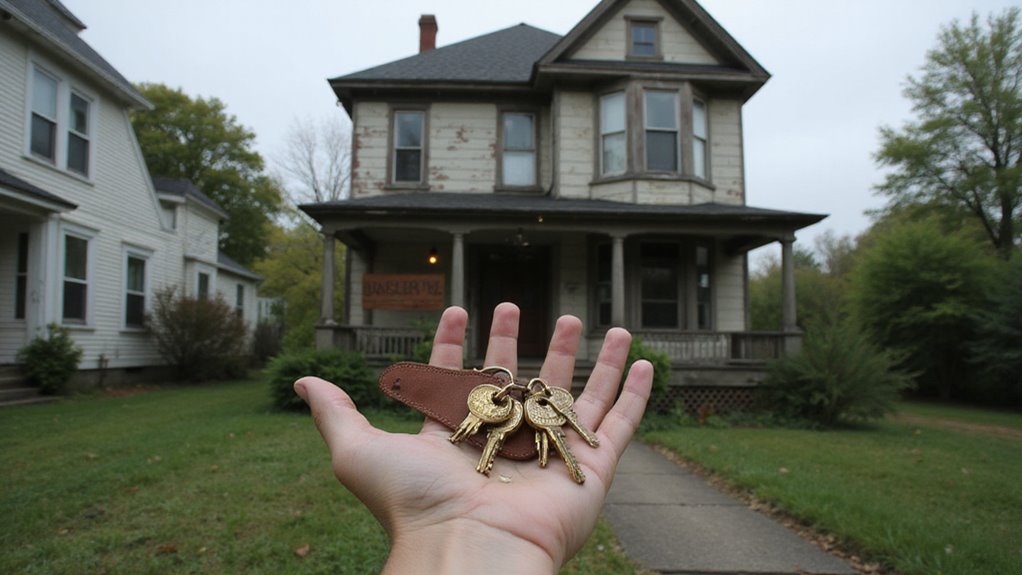
You have a house that needs work. Maybe the roof leaks, or the kitchen looks like it’s from 1975. You want to sell, but you’re not sure whether to fix it up first or sell it as-is. This is a big question for homeowners in Nebraska, and the answer affects how much money ends up in your pocket.
Many people think fixing up a house before selling always brings more money. That’s not always true. Sometimes repairs cost more than they add to your sale price. Other times, you might wait months for the work to finish while still paying the mortgage, utilities, and property taxes.
This article breaks down the real numbers. You’ll learn what repairs actually cost in Nebraska, how much value they add, and how to figure out your best move. By the end, you’ll know whether fixing up makes sense for your situation or if selling as-is puts more cash in your hand.
Nebraska homes face specific problems based on our weather and the age of many properties. Knowing what repairs actually cost helps you make smart choices.
Roofing is often the biggest expense. A new roof in Nebraska costs between $5,000 and $15,000 for most homes. The price depends on your home’s size and the materials you choose. Asphalt shingles cost less than metal or tile. Nebraska’s harsh winters and summer storms mean roofs wear out faster here than in milder climates.
Foundation issues come next. Cracks, settling, and water damage are common in Nebraska because of our soil conditions. Minor foundation repairs start around $2,000. Major foundation work can hit $10,000 to $30,000. These problems scare buyers away fast.
HVAC systems matter a lot in Nebraska. We need heating for cold winters and cooling for hot summers. Replacing a furnace costs $2,500 to $6,000. A new air conditioning unit runs $3,000 to $7,000. If both need replacing, you’re looking at $5,500 to $13,000.
Kitchen and bathroom updates eat up budgets quickly. A basic kitchen remodel costs $12,000 to $35,000 in Lincoln or Omaha. Bathroom renovations run $6,000 to $15,000. Even small updates, such as new countertops or fixtures, cost $2,000 to $5,000 per room.
Electrical and plumbing repairs hide behind walls but can’t be ignored. Rewiring an older home costs $4,000 to $10,000. Replacing old plumbing runs $2,000 to $8,000. Many Nebraska homes built before 1980 need these updates to meet current codes.
Windows and siding also add up. New windows for a typical home cost $5,000 to $15,000. New siding ranges from $8,000 to $25,000. These projects improve energy efficiency, which matters amid Nebraska’s extreme temperatures.
Paint and flooring may seem cheaper, but they still cost real money. Interior painting for a whole house runs $2,000 to $5,000. New flooring costs $3,000 to $10,000, depending on materials and square footage.
Here’s the tough truth: repairs don’t add dollar-for-dollar to your sale price. You might spend $10,000 on updates, but only increase your home’s value by $6,000 or $7,000.
Real estate experts call this the return on investment (ROI). Most home repairs recoup 50% to 80% of what you spend. That means for every $100 you invest, you might only get $50 to $80 added to your sale price.
Kitchen remodels typically return 60% to 70% of their cost. If you spend $20,000 on a kitchen, your home might sell for $12,000 to $14,000 more. That’s a loss of $6,000 to $8,000 right away.
Bathroom updates return about 55%-65%. A $10,000 bathroom remodel might add $5,500 to $6,500 to your sale price. You’re short $3,500 to $4,500.
Some repairs return almost nothing in sale price. Roof replacements only return about 40% to 50%. You spend $10,000 on a new roof, but buyers might only pay $4,000 to $5,000 more for the home. Why? Because buyers expect a working roof. They see it as basic maintenance, not an upgrade.
Foundation repairs work the same way. You might spend $15,000 fixing foundation problems, but buyers won’t pay much more for your home. They just won’t buy it at all if the foundation is broken. These repairs remove obstacles but don’t add value.
HVAC replacements return about 50%-60%. New systems work better and cost less to run, but buyers see them as expected rather than special.
Location also matters. In hot Nebraska markets like Lincoln or Omaha, repairs might return more because buyers compete for homes. In rural areas or slower markets, you’ll get less return.
The condition of other homes in your neighborhood sets a ceiling. If every house on your block sells for $180,000, making yours perfect won’t push it to $220,000. The neighborhood itself limits your price.
Time costs money, too. Repairs take weeks or months. While you wait, you keep paying the mortgage, insurance, utilities, and property taxes. If those costs run $1,500 per month and repairs take four months, that’s another $6,000 out of your pocket.
Let’s run real numbers to see which choice puts more money in your hand.
Say your house needs $25,000 in repairs. If you fix everything, maybe your home sells for $200,000 instead of $175,000 as-is. That looks like you’re $25,000 ahead, right? Wrong.
Start with that $25,000 repair cost. Now add the time factor. Repairs take three months. Your monthly costs are $1,800 (mortgage, insurance, taxes, utilities). That’s another $5,400.
You also pay real estate agent fees. At 6% commission on a $200,000 sale, that’s $12,000. Closing costs add another $4,000. Your total costs are now $46,400.
From your $200,000 sale, subtract $46,400. You net $153,600.
Now look at selling as-is to a company like Sell To How. They offer $160,000 cash. No repairs, no agent fees, no waiting. You might close in two weeks. No monthly payments are eating into your profit.
You net $160,000, which is $6,400 more than if you fixed everything up.
Here’s another example with smaller repairs. Your house needs $10,000 in work. Fixed up, it sells for $185,000. As-is, it sells for $180,000.
With repairs: Spend $10,000. Wait two months ($3,600 in monthly costs). Pay $11,100 in agent commission and $3,700 in closing costs. Total costs: $28,400. Net profit: $156,600.
Without repairs: Sell as-is to a cash buyer for $175,000. Close in two weeks. Keep $175,000.
In this case, repairs win by $1,600, but you wait months and deal with contractors. Some people choose the cash offer anyway for speed and simplicity.
The math changes based on your numbers. Make a simple chart:
As-Is Sale Price: $______
Minus Your Mortgage Payoff: $______
Your As-Is Net: $______
Fixed-Up Sale Price: $______
Minus Repair Costs: $______
Minus Monthly Costs During Repairs: $______
Minus Agent Commission (6%): $______
Minus Closing Costs: $______
Minus Your Mortgage Payoff: $______
Your Fixed-Up Net: $______
Compare the two nets. The larger number is your better financial choice.
Sometimes fixing things up is the right move. Here’s when repairs pay off.
Small cosmetic updates often make sense. Fresh paint costs $2,000 but might add $4,000 to $5,000 in buyer appeal. Cleaning carpets or replacing worn flooring in main areas costs $1,500 and makes homes show better.
If your house is nearly perfect and just needs one repair, fixing it might be worth it. A home worth $220,000 with a $3,000 plumbing issue should get fixed. The repair is small compared to the value.
In hot seller’s markets, buyers have choices. They’ll skip houses with problems. A few smart repairs might be the difference between selling fast and sitting unsold for months.
When your repair costs are under 5% of your home’s value, consider fixing. A $200,000 house with $8,000 in needed work sits at 4%. That’s manageable. But if that same house needs $40,000 in work (20% of value), selling as-is makes more sense.
If you have time and cash available, repairs might fit your situation. Maybe you’re not in a hurry. You can pay for repairs without borrowing money. You don’t mind managing contractors. Then, fixing up could work for you.
Safety and code issues sometimes must be fixed before any sale. If your electrical system is dangerous or your home can’t pass inspection, you might need repairs just to sell at all.
However, most Nebraska homeowners with fixer-uppers do better selling as-is. Here’s why:
You avoid the stress of managing repairs. No dealing with contractors who show up late or do poor work.
You skip the surprise costs. Repair projects almost always cost more than estimates. That $8,000 kitchen update turns into $12,000 when you find water damage behind the old cabinets.
You eliminate the time drain. Selling as-is to Sell To How means closing in weeks, not months. You move on with your life.
You get certainty. Cash offers don’t fall through because of inspection issues or buyer financing problems.
For most people selling a house that needs repairs in Nebraska, the as-is route puts more money in their pocket and causes a lot fewer headaches.
Yes, you can absolutely sell a house with foundation issues in Nebraska. Traditional buyers might walk away, but cash home buyers like Sell To How buy properties in any condition. You don’t need to fix the foundation first. Cash buyers make offers based on the home’s current condition and then handle repairs themselves after closing. This saves you from spending $10,000 to $30,000 on foundation work that might not fully pay for itself in your sale price. You get a fair cash offer and close quickly, without the stress of repairs.
This depends on your selling method. Listing with a real estate agent can take four to six months for a fixer-upper, sometimes longer. You’ll wait for the right buyer who wants a project or can get renovation financing. Many buyers entirely skip houses that need work. Selling as-is to a cash buyer like Sell To How takes two to three weeks from offer to closing. You skip repairs, skip showings, and skip the uncertainty. For Nebraska homeowners who need to move quickly or can’t afford months of mortgage payments, the cash option saves both time and money.
Nebraska law requires sellers to disclose known material defects. That means if you know of problems with the roof, foundation, plumbing, electrical systems, or other major systems, you must tell buyers. Hiding known issues can lead to lawsuits after closing. When you sell to a company like Sell To How, you still disclose problems, but it matters less. Cash buyers expect issues and buy homes as-is. They’re not surprised by repair needs and won’t back out during inspection. Traditional buyers might use your disclosures to negotiate your price down or walk away completely.